by
by 
There’s a lot of hype around heavy-duty touring boots these days. It’s not that lightweight gear has gone out of style, but stiff, powerful touring boots are definitely having a moment. Salomon’s been a major player in that game for a few years now with the the Shift Alpha BOA boot, a crossover freeride boot that put a viable walk mode on a narrow-lasted 130-flex resort boot. I skied the older boot almost exclusively for a season as a resort/sidecountry boot, so have a pretty good sense of what it was all about.
The boot wasn’t perfect, but it worked pretty well for what it was intended to do. This season, in between launching a new Shift 16 binding, dropping a fresh S/PRO Alpha BOA boot, and updating their line of QST skis, the French brand quietly updated the Shift Alpha BOA boot, cleverly adding stiffness without messing with the fit or walkability. In other words, if you wanted a stiffer version of this boot that walks just as well, it’s here.
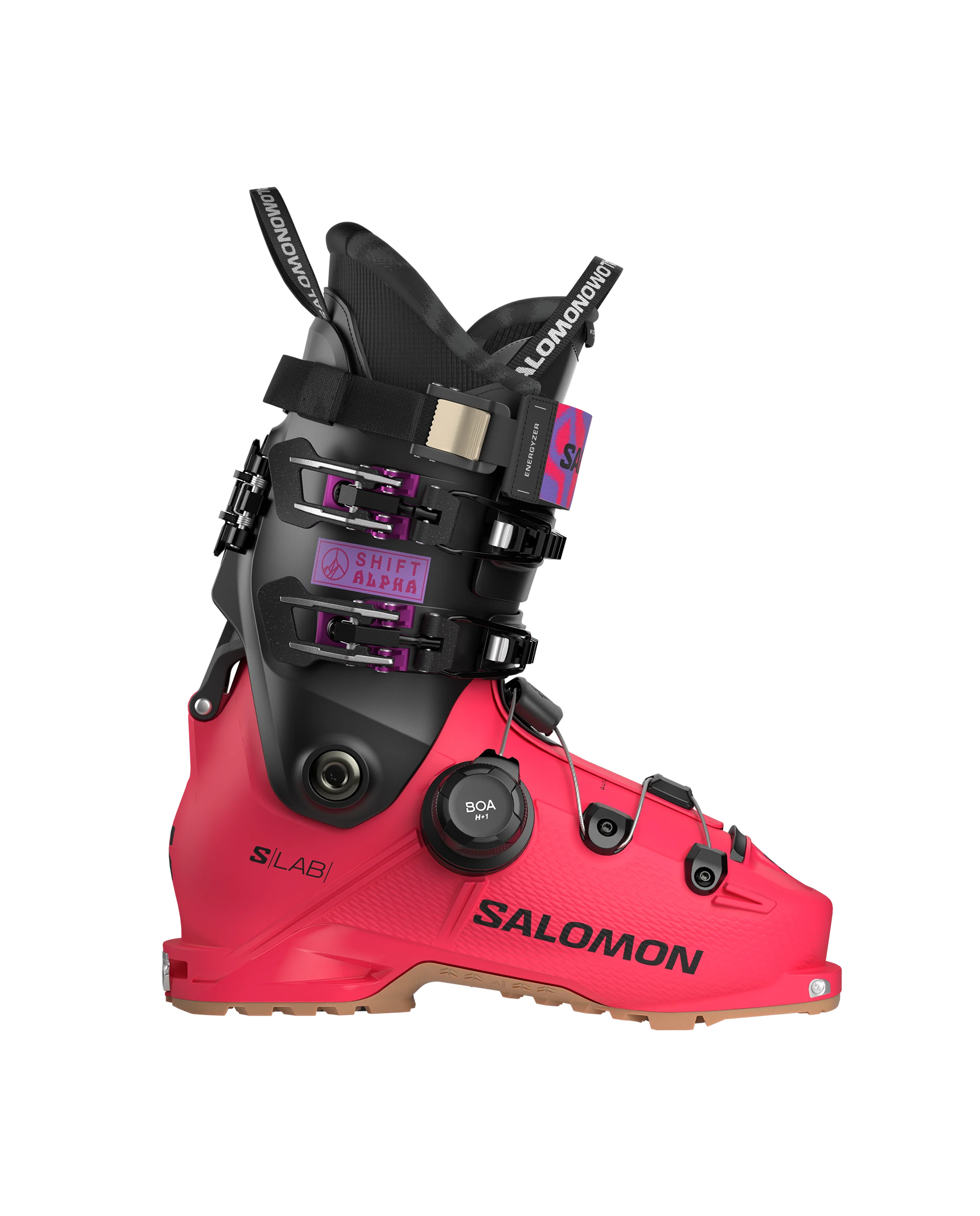
2027 Salomon S/LAB Shift Alpha BOA Boot Specs:
- Sizes available: 22.5-30.5
- Stated Flex: 140
- Binding Compatibility: Alpine ISO 5355, Grip Walk, Tech
- Closure: BOA, 2 buckles
- Forward Lean: 13.5 degrees
- Ramp Angle: 4 degrees
- Stated Last Width: 98mm
- Weight: 1840g per boot
Fit & Features
Salomon has kept the fit identical to the old Shift Alpha BOA 130 boot, with a narrow 98mm last, medium instep height and roomy toebox. I would say it feels a bit narrower than other boots with that stated width, particularly in the heel pocket. The toe box is square and tall like other Salomon boots, giving extra room to my big toe specifically. In fact, the shell feels a smidge longer than other 27.5 boots I’ve tested.
Both the shell plastic and liner are heat-moldable like other high-end Salomon boots. See a bootfitter if you’re unsure, but its possible to mold these at home. My favorite part of the is how effective the BOA and EXO Belt ankle strap are at holding your foot in the right place.
Interestingly, Salomon doesn’t publish a range of motion measurement for the walk mode, and honestly, I think that’s a testament to this boot’s downhill-shredding intentions. This isn’t a boot meant for winning uphill races, but it will get you to the top of the hill.
What did Salomon update on the Shift Alpha BOA?
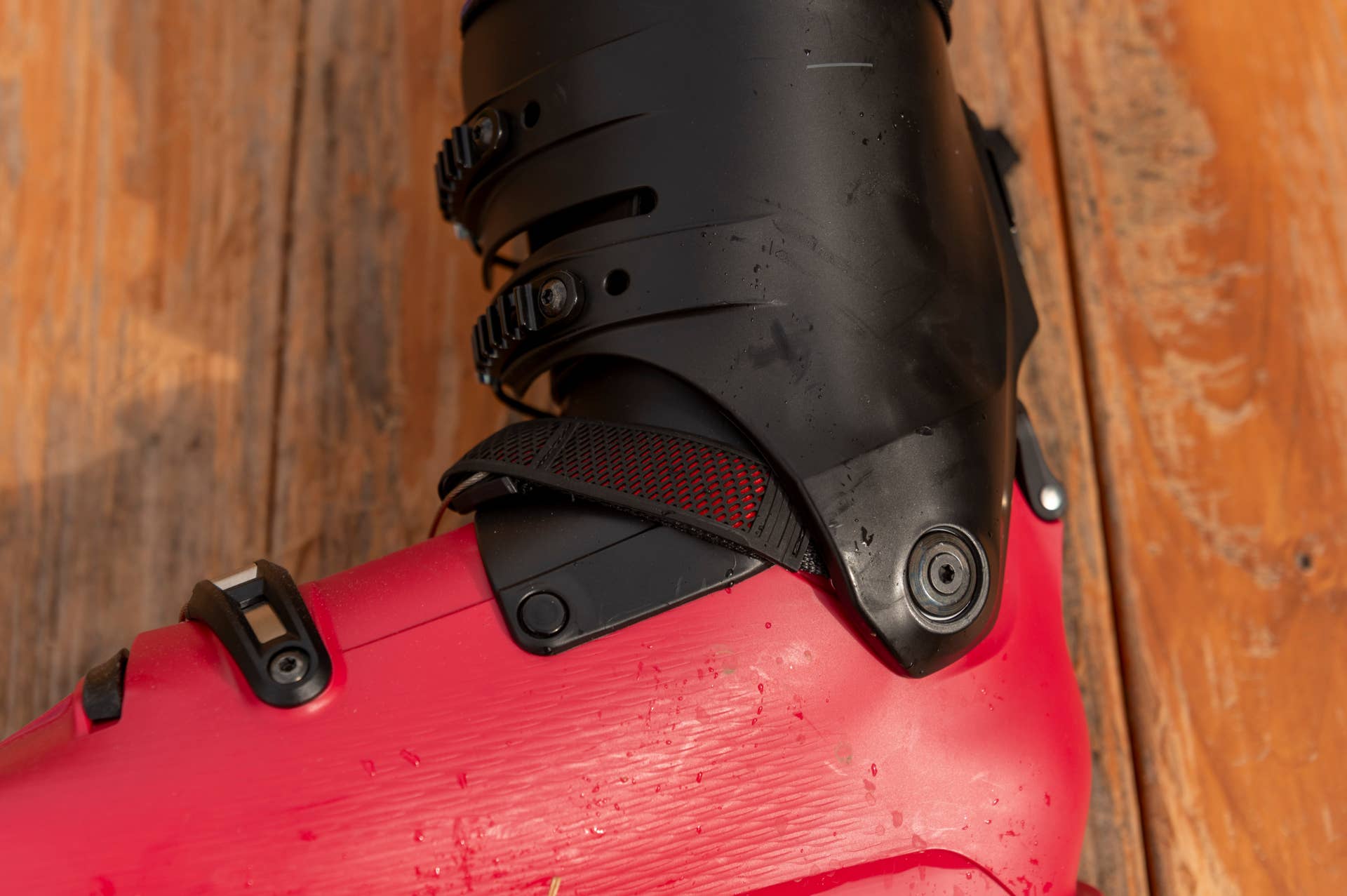
I’m always a fan when a brand takes a product that’s already pretty good and does subtle tweaks to make it even better–without messing with the basic things that made the product great from the start. Salomon did just that with the new Shift Alpha BOA. At first glance, the new boot looks identical to the older version (save for the color update…I did like the purple). That’s because the cuff and scafo are, in fact, identical. The cuff is still made of lighter-weight Pebax, while the lower features heavier and damper PU plastic. Look a little bit closer, however and you’ll notice that there’s an extra piece of plastic between the cuff and lower, wrapping the instep underneath the ExoBelt BOA fastener.
That piece of plastic is where the magic happens on this boot. Similar to what K2 did with their removeable PowerPlate on their Recon and Mindbender 140 boots, intentionally adding plastic right where the boot flexes works wonders to add power. While it’s in a slightly different position than on the K2 boots, Salomon also calls this piece a “powerplate.”
Aside from the added shell plastic, Salomon also upgraded the boot liner–a much needed change in my opinion. While the stock liner on the first-gen boot certainly felt high-quality, the plastic tongue caused me more grief than I could even begin talking about. Something about how to plastic tongue integrated into the rest of the liner did not line up with my foot, and I couldn’t last more than a few runs in it. On the new Shift Alpha BOA, the liner was redesigned with heavy input from the Salomon athlete team to address fit issues and focus on comfort. Unlike a race boot designed to be worn for just a few runs, the Shift Alpha BOA is a boot designed to spend big days in the backcountry, so it simply had to be comfortable. The new liner and its neoprene toe box, updated plastic tongue design, and lace-up cuff, is definitely worth keeping.

On-Snow Performance
Personally, I found that the older Shift Alpha BOA flexed nicely–it was damp, smooth, and really took the edge of weird snow. It was stiff, but as I mentioned in my original review it was not “flexing into a brick wall” stiff. The new boot dramatically adds to the stiffness, putting it on par with most 130-flex resort boots I’ve been in, and kind of made me forget about the walk mode. As before, the flex feels very progressive, and the boot is very damp–that’s especially noticeable when skiing hard inbounds through questionable snow.
To be honest, there isn’t really a whole else to say about how the boot skis. It’s really stiff, wraps your foot incredibly well, and delivers power to your ski as well as just about anything short of a race boot.
When touring, the stiff liner and added instep plastic definitely limit the range of motion. At 1850 grams, they’re not exactly light either. These would not be my first choice as a pure backcountry boot, but they make sense for short tours, mechanized-access ski touring, or as a one-boot quiver for traveling.
One thing I still wasn’t a huge fan of was the boot’s upright 13-degree forward lean angle. This boot is clearly aimed at hard-charging resort skiers looking for the ability to tour/hike in a stiff boot, so why not match that forward lean to an aggressive freeride or race boot (which they’re likely coming off of?).
Who Is the Salomon Shift Alpha BOA Boot For?
Salomon’s Shift Alpha BOA is clearly aimed at a pretty niche bit of the ski market, but does what it sets out to do very well. The simple addition of the powerplate over the instep dramatically improves ski performance of the older version (which already skied quite well), making it even better suited to use as a pure resort boot.
Compared to a boot like the Tecnica Decoy Pro or Atomic Hawx XTD, the new Shift Alpha is a better option as a true crossover boot, and something I’d ski every day in the resort.
I wouldn’t recommend this as a pure backcountry boot, unless you really don’t care about the limited walk mode ROM, but it’s an awesome choice as sidecountry or sled-skiing boot, and would make a great work boot for mechanized guides, patrollers, or prodution folks.